

Credit Applications & Your Business
 Collection Prevention Part 5
 Collection Prevention Part 5
A Quick Review of Collection Prevention Parts 1 thru 4
Part I – Get complete contact information from new customers and double-check contact information with returning customers, especially if it’s been a while since you’ve seen them. For a more complete discussion, read Part 1 here. You can also download a Contact Information Check List here. A good credit application should take care of this requirement. One of many good reasons to use one.
Part II – Invoicing errors are responsible for more than half of the late payments we see. For a more complete discussion, read Part 2 here and/or download a PDF list of the 12 invoicing errors I see most often.
Part III – How to use your aging to collect and prevent bad debt. For the complete discussion, read Part 3 here
Part IV – *Your Credit Collection Policy – Improve your credit decisions, read Part 4 here.
Boring But Important

A conversation about preventing debt and avoiding collection agencies has to include a discussion of credit applications—including when, why, and how.
My mantra in this series has been, and remains, that many, if not most, of your collection problems are preventable. A simple credit application is a powerful tool in your quest to avoid collections and collection agencies.
Moving On … What to Consider BEFORE Extending Credit to Potential Clients
- Cash flow impact: Evaluate how extending business credit will affect your immediate cash flow and your ability to meet your own financial obligations.
I know you thought I was going to discuss the credit worthiness of your customer first – and of course if you’re going to extend credit your customer needs to be good for it. But the most important factor is whether or not your business can handle it if the customer doesn’t pay or pays late. Our rule of thumb is simple, and doesn’t require an analysis, or even an understanding of, debt to income ratio. If you can’t afford to lose it don’t loan it.
- Your Risk Tolerance: Again, no formulas required. Are you going to worry about it? If so, don’t do it.
- Industry norms: Assess whether offering credit is necessary to remain competitive in your market.
Seriously, if you don’t have to extend business credit – don’t. Or at least don’t loan your own money. There are several companies out there now that might extend credit for you, for a price, generally 2% to 4% of the amount being financed. This is known as the BNLP buy now, pay later space.
And of course;
- Customer Creditworthiness: Invest in credit checks and business credit reports to evaluate the credit history and ability of potential customers to repay debts.
Business Credit Reports
We used to do this manually, faxing forms to the banks multiple times to find out what kind of money they kept in the bank, calling and faxing vendors, and sometimes friends and family. It was a lot of work, but now, all the information you need is available for a nominal fee – you’ll still need to exercise some judgment, but the information readily available.
There are several major business credit reporting agencies you can use for business credit reports before offering financing:
- Dun & Bradstreet – Offers various tiers of credit monitoring services, including free alerts for changes to key scores.
- Experian – Provides one-time reports as well as ongoing monitoring plans at different price points.
- Equifax – Offers comprehensive business credit reports with detailed company profiles and risk scores.
- Business Credit Reports, Inc. – Provides blended reports using data from multiple bureaus for a more complete picture.
B2B Lending & The 5 C’s 
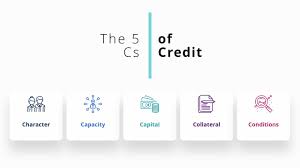
From out friends over at the Kaplan Group. We can’t take credit for coming up with the 5 C’s – but we’ll bring you information from wherever we need to, to ensure you can either avoid collections or recover as much as possible – this is a summary – here is a link to the original article.
Character
The saying goes, “The way you do anything is the way you do everything.” To assess character, quickly review your prospective customers’ reviews. What do their customers think of them? When you contact their company, are the employees friendly and helpful? Negative reviews and poor attitudes are not only a possible reflection of poor character, but can also impact their profitability and subsequent ability to pay.
Capacity
Capacity refers to your customer’s ability to pay. To evaluate capacity, use your credit application and the business credit reports we discussed earlier.
Capital
Capital includes money, investments, and other liquid assets they can use to fund business activities. It refers to the financial resources they use to operate, grow, and generate returns, including both equity and debt funding sources. Again, evaluate your customer’s financial position using business credit reports and the information they provide on your credit application.
Collateral
In the context of B2B (business-to-business) transactions, extending credit to another business introduces a level of financial risk. To mitigate this risk, businesses may require a personal guarantee instead of collateral. A personal guarantee is a promise made by an individual—often a business owner or executive—to repay the debt if the business itself cannot fulfill its financial obligations.
Conditions
When extending credit to a client or prospective client, “conditions” specifically pertains to the terms of the loan, contract, or order. Ensure your terms and credit application comprehensively outline the terms of repayment, interest on late payments, acceleration clauses, and other provisions that safeguard your business if your customer defaults.
 Red Flags and Warning Signs
 Red Flags and Warning Signs
You know them when you see them. You know you do, but here are a few anyway. This is not an exhaustive list but rather some of the more obvious and common signs of trouble ahead.
- New Customer, Big order, Big rush – Be cautious of new customers who place large orders and demand quick delivery. This urgency could be a red flag for potential fraud or logistical issues.
- Inconsistent Information: Mismatched or incomplete customer details.
- Unusual Payment Methods: Requests for unconventional or insecure payment options.
- Reluctance to Provide Information: Hesitation to give references or additional business details.
- Rushed Communication: Pressuring for expedited processes without a clear reason.
- Shipping to High-Risk Locations: Requests to deliver to areas known for high fraud rates.
- Multiple Delivery Addresses: Requesting shipments to several locations without a clear business need.
- Overpaying and Requesting Refunds: Overpaying on purpose and then asking for a refund.
- Suspicious Email Domains: Using free or obscure email domains instead of company domains.
- No Website or a Brand New Website: Suggests a lack of established business presence or credibility. Such companies might be temporary, unverified, or lacking a track record, raising concerns about their reliability and intent.
Fraud – Four Free and Easy Ways to Recognize & Head Off Fraud
At this stage, you should understand that we want you to not only have your prospective customers fill out a credit application but also confirm that the information you’ve been given is true and accurate.
On this point Dean Kaplan from the Kaplan Group says “we regularly get claims where this has not been done and we discover that the information provided was either misleading or outright fraud.”
Take five minutes on the internet and check these four free resources to uncover indications of possible fraud.
- Confirm the location: According to Dean Kaplan over 90% of the fraud cases they see use either a mailbox service, a residential location or an executive suites location as a primary address. This doesn’t mean everyone working out of their homes and using a commercial mail location is a fraud – but it does warrant a second look. Google Maps is your friend.
- Confirm the phone numbers – Call the numbers, is there voice mail? Or just what we call unidentified voice mail.
- Check the website: Is there a working phone number? Is the address listed and the contact information consistent with what was provided on the credit application. Call the phone number – on both the website and the credit application. Look for these negative indicators.
- Phone answered unprofessionally
- The voice mail system does not identify the company;
- No live person available
- Voice mail goes nowhere or is always full, unable to leave message
- It is a cell phone voice mail greeting;
- It is a direct line to an individual.
- Validate the entity: Check the Secretary of State website to confirm they are who and what they say they are – it’s easy to do in most states. Our friends over at the Kaplan Group have a terrific resource page with links to the Secretary of State in 47 states.
The Business Credit Application
… to Due Diligence and Credit Applications. Another way, in fact probably a better way to collect contact information is with a credit application that is appropriate to your companies needs. Not every order is big enough to warrant a full fledged credit check but even if the order is too small it’s a good idea to have your customer fill one out. The purpose of the credit application is 3-fold;
- Collect information to evaluate credit worthiness
- Establish terms
- Secure protection in the event of default
You’ll want to collect not only the information you need now to process the order being placed but also the information you may need in the future should your customer default. You’ll want all the basic contact information including;
- Company Name
- Type of entity
- Owner or President’s name
- Address
- As many phone numbers as you can get
- Amount of credit needed
Trade and Bank References
A common error I see when evaluating credit is the failure to obtain banking information. Remember, most companies can easily provide 3 vendors who will say your prospective customer pays timely, whether they do or don’t. A bank reference will give you a truer picture of your customers financial condition, including average balances, loans etc.
Terms and Conditions
–Without written terms and conditions any agreement you make with your customer is worth just about as much as the paper it’s written on. Without signed documentation your customer could claim anything. “The sales person said I could return it within 6 months,” or “I was told I could pay when I get paid” are a couple we’ve heard many times. Our friends over at The Kaplan Group recommend including the following in any agreement to grant credit;
- Binding agreement
- Authorized to bind company (so you can avoid “he wasn’t authorized to order”
- Information is true
- Permission to evaluate credit
- Vendor’s discretion to grant credit
- Applicant owes Vendor
- Vendor’s forms have precedence
You can download their 78 page Credit Application Handbook on our Resources Page here, or on their website here. It has several editable credit applications and guidance on how to use them. And it includes a checklist of 40 items you can use to evaluate your credit application as well.
*This is an updated version of an article we originally published in February of 2019.

